

I was recently asked a straightforward question: Are lobbyists a valuable component in the development of public policy? After more than four decades working with the Colorado General Assembly, state agencies, local governments, associations, and businesses, my answer is yes—but only when professional advocacy is practiced responsibly. Lobbyists are advocates. We are hired to represent a client, explain that client’s concerns, and work toward a particular outcome. We are not neutral observers, and we should never pretend to be. But being an advocate does not prevent a lobbyist from making a positive contribution to the public policy process. Legislators, regulators, and local officials must make decisions on hundreds of complicated issues. They cannot reasonably be expected to understand every profession, industry, community, or government program affected by those decisions. A responsible lobbyist can help fill that knowledge gap. We bring information from the people who will be directly affected by a proposal. We explain how a business operates, how a government program works in practice, or how a new requirement may affect a community. We can identify unintended consequences, suggest workable amendments, provide historical background, and bring people with different perspectives to the same table. During my career, I have often entered a discussion opposing a proposal, only to discover that the better outcome was not defeating it but helping rewrite it so it achieved its purpose without creating unnecessary costs or unintended consequences. In those situations, the real measure of success was not whether one side won. It was whether the final policy worked better for the people expected to follow, administer, or enforce it. That work does not end when a bill is signed. Public policy is also shaped during agency rulemaking, program implementation, and local administration. A law that appears workable on paper may create practical problems when an agency develops regulations or when a city, county, business, or professional must put it into practice. Responsible advocacy can help identify those problems early and offer solutions that preserve the intent of the law. Lobbyists should not, however, claim more credit than we deserve. We do not replace constituents, legislative staff, agency experts, local officials, or the public. We do not make the final decisions. That authority belongs to elected and appointed officials who are accountable to the people they serve.

In the world of government affairs and legislative strategy, timing isn't just everything; it is the only thing. A delay of twenty-four hours in analyzing an amendment or adjusting a messaging strategy can mean the difference between a bill passing or dying in committee. For decades, the standard playbook for lobbyists, policy analysts, and government relations teams relied entirely on manual labor: reading hundreds of pages of dense bill language, tracking committee schedules via archaic state websites, and drafting bespoke responses under crushing deadlines. But by 2026, the baseline has shifted. If you are still relying solely on those manual methods to guide your legislative activities, you aren’t just old-school—you are behind the eight ball. The adoption of Artificial Intelligence in legislative practices is no longer a futuristic "nice-to-have." It has quickly become the defining line between strategic proactive leadership and frantic, reactive damage control.
By The Kyle Group / Hardball Strategies | hardballstrategies.com The end of a legislative session is unlike any other moment in politics. The pace accelerates. Tempers shorten. Deals that seemed impossible on Day 1 suddenly become possible — and deals that seemed certain can evaporate overnight. If you still have legislation sitting on the calendar, waiting for a floor vote, stuck in committee, or caught in a conference negotiation, you don't have the luxury of patience anymore. So what do you do when time is running out and your bill still isn't over the finish line? Here's what works.
Advocacy is often misunderstood as something reserved for lobbyists or large organizations with deep pockets. In reality, advocacy is a critical function for associations and businesses of all sizes—one that can directly shape policy, protect industry interests, and influence public perception. Yet many organizations underinvest in one of the most important components of successful advocacy: training.

Midway through a legislative session is when reality sets in. The early optimism is gone, deadlines are tightening, and the scoreboard is no longer theoretical—you know which bills are moving, which are stalled, and which are in trouble. This is the moment that separates disciplined advocacy programs from reactive ones. A mid-session analysis isn’t optional—it’s essential. If you’re not taking a hard look at performance right now, you’re likely missing the opportunity to correct course while there’s still time to influence outcomes. Start with a clear-eyed assessment of your portfolio. Which bills are advancing on schedule? Which are stuck—and why? Strip away assumptions and focus on facts: vote counts, committee dynamics, sponsor engagement, and opposition activity. In Hardball Advocacy: Secrets of the Lobby, I emphasize that successful advocates don’t rely on hope or momentum—they rely on constant recalibration. If a bill is lagging, identify the precise point of friction. Is it a messaging problem? A stakeholder conflict? A lack of leadership support? Each requires a different response, and misdiagnosing the issue is often what keeps bills stuck. Equally important is evaluating what is working—and scaling it. If certain messages are resonating, amplify them. If a coalition partner is effective, give them a larger role. If a legislator is emerging as a champion, leverage that influence. At the same time, don’t hesitate to make tough calls. Not every bill can or should be saved. Strategic triage—shifting time, energy, and political capital toward viable paths—is often the difference between salvaging a session and watching it slip away. The best advocates treat mid-session as a reset point, not a checkpoint. They adjust tactics, re-engage decision-makers, and reassert control over the process. Because at this stage, the question isn’t whether you’ve worked hard—it’s whether you’re working effectively. And effectiveness is measured in movement. If you want a structured approach to diagnosing problems, applying pressure, and recalibrating strategy in real time, that’s exactly what I break down in Hardball Advocacy: Secrets of the Lobby. 👉 Get the playbook: https://a.co/d/6oEXEQ0

It’s been one year since Hardball Advocacy: Secrets of the Lobby was released, and the response has been both humbling and instructive. The book was written to demystify advocacy—to move beyond theory and provide a clear, experience-driven understanding of how influence actually works in legislative and policy environments. Over the past year, it has reached a wide audience of professionals, advocates, and decision-makers who recognize that success in this space depends on more than just having a good argument. What has stood out most is how readers are using the book. This isn’t a passive read—it’s a working guide. Feedback consistently highlights its practical value: understanding timing, building leverage, navigating opposition, and recognizing the structural realities that shape outcomes. Readers have emphasized that the book gives them a framework to operate more effectively, not just more confidently. That was always the goal—to create something that could be applied in real-world situations where stakes are high and margins are thin. Equally important has been the reception to the book’s tone and accessibility. Advocacy can often feel opaque or overly technical, but Hardball Advocacy has been described as clear, candid, and engaging. Readers aren’t just learning—they’re enjoying the process. One year in, that combination of substance and readability has proven to be its strength. The takeaway is simple: when people understand how the system truly works, they are far better equipped to succeed within it—and that’s a conversation worth continuing.

disciplined advocacy strategy can change the balance of power.
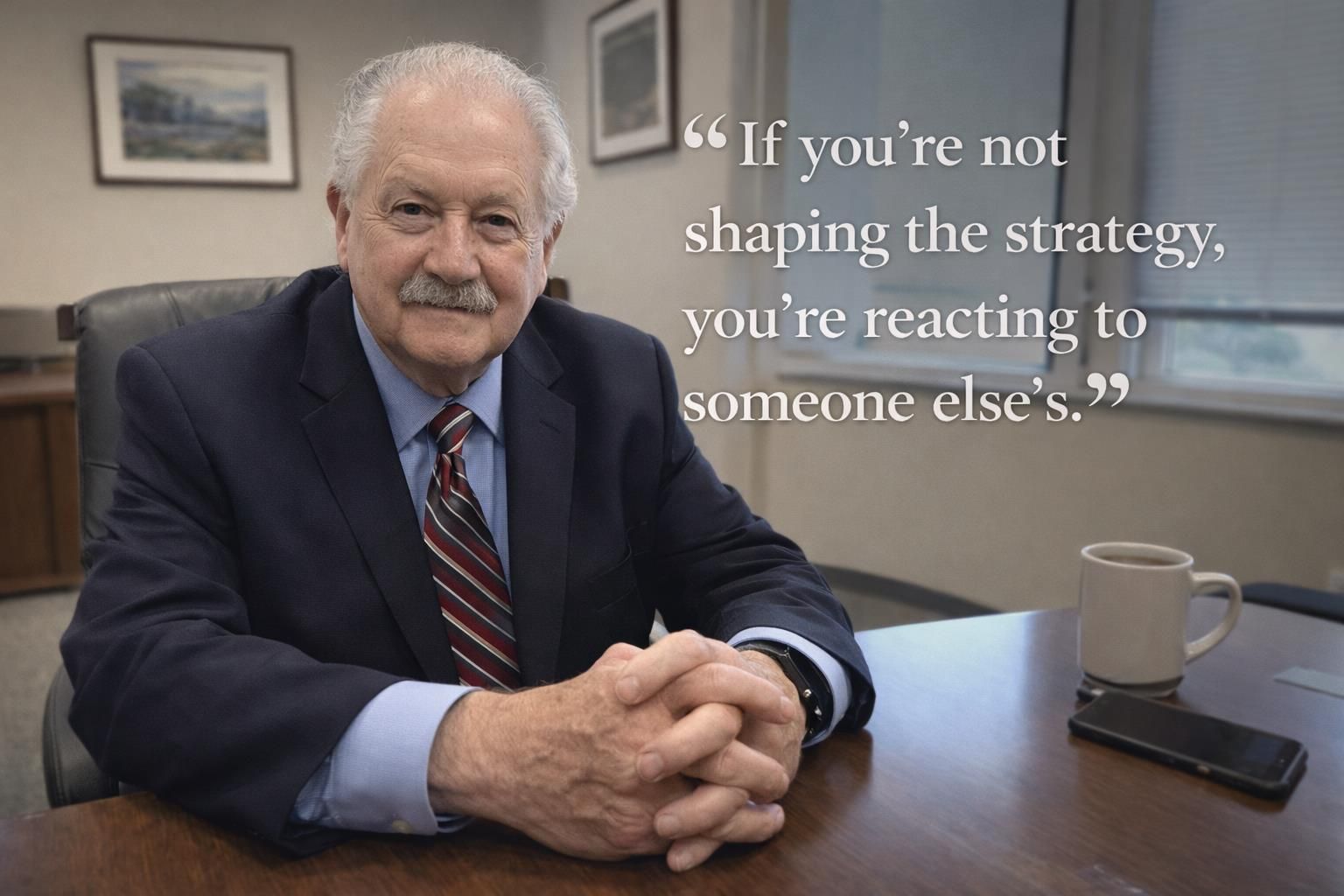
Being proactive in public policy isn’t about being the loudest voice in the room — it’s about being the most prepared. Too often, organizations find themselves reacting to proposals, amendments, or regulatory changes that were shaped without their input. By the time they engage, the framework is already built. Influence doesn’t start when a bill is filed; it starts long before that, with intentional positioning and disciplined planning. Proactive leadership requires a clearly defined legislative strategy. That means identifying your objectives, mapping stakeholders, building coalitions, understanding committee dynamics, and anticipating opposition. It requires message discipline, timing, and sustained engagement — not sporadic outreach when something threatens your interests. Strategy is not a document that sits on a shelf; it is a living framework that directs action toward specific outcomes. If you are not shaping the strategy, you are reacting to someone else’s. The organizations that consistently achieve their legislative goals are those that set the agenda, cultivate relationships early, and execute with focus. Proactive engagement isn’t optional in today’s environment — it’s the difference between influence and irrelevance.
One of the biggest mistakes new advocates make is assuming that legislation moves in a straight line. Draft a bill, find a sponsor, testify, pass it—done. Anyone who has spent time inside a statehouse knows that nothing could be further from the truth. Chapter 8 of Hardball Advocacy: Secrets of the Lobby is about discipline, timing, and strategy. It lays out a practical roadmap for initiating and passing legislation by understanding legislative cycles, aligning your tactics to those cycles, and deliberately building the support structure necessary to win. Legislation is not an event. It is a campaign.